

Delta 8, Delta 9, Delta 10 - sounds like a math problem, right? But it’s not.
Just when you thought you had a handle on THC, along come Delta 8, Delta 9, and Delta 10.
What’s all the fuss about?
Do they make you “high”? Can you buy them legally?
How do they affect your body and mind?
Do they have potential health benefits?
You’re probably familiar with CBD and THC - two most researched and well-known primary cannabinoids found in the cannabis plant.
But what you might not know is that there are different types of THC.
How many types of THC exist?
Well, quite a few, some research suggests that there might be around 20 THC cannabinoids, while others list six main types.
Today, we’re talking about Delta 8 THC, Delta 9 THC, and Delta 10 THC. Most of the time, when we or others mention THC, we mean Delta 9 THC.

Have you ever wondered why different strains of cannabis affect you differently? The answer lies in the subtle differences between these three types of THC, and the presence of terpenes, flavonoids and other cannabinoids.
Delta 8, Delta 9, and Delta 10 are all different forms of THC (Tetrahydrocannabinol), which is a primary cannabinoid found in cannabis plants.
They have similar molecular structures, but they produce slightly different effects due to subtle differences in their carbon bonding.
Key Takeaways
- Delta 8 THC:
- Less potent than Delta 9, with reported milder psychoactive effects.
- May be less likely to cause anxiety or paranoia compared to Delta 9.
- Delta 9 THC:
- Most abundant form of THC, known for its psychoactive effects.
- The most researched cannabinoid for potential benefits for sleep and relaxation.
- Delta 10 THC:
- Least potent of the three, reported to be energizing and mood-boosting.
- May have cognitive-enhancing effects, but further research is needed.
Note: There’s a worrying lack of research into Delta 8 THC and Delta 10 THC. We don’t yet know its potential benefits and risks. Consult a healthcare professional before using any THC products.
Delta 8 and Delta 10 THC are only found in trace amounts in the cannabis and hemp plants, that’s why these products are usually synthetically enhanced typically using organic solvents such as toluene or heptane with p-toluenesulfonic acid or another acid that serves as a catalyst.
Delta 9 THC is already present in abundant forms in the hemp and cannabis plants, so there’s no need to extract it synthetically and is considered ‘natural’.
The Different Forms of THC

What is THC?
THC is a cannabinoid, which is a type of chemical that interacts with the endocannabinoid system (ECS) in our body.
The ECS is a complex network of receptors and enzymes that regulates various functions, such as mood, pain management, sleep, memory, inflammation and much more.
THC, just like CBD (cannabidiol) is a phytocannabinoid.
Phytocannabinoids are plant-based compounds that occur naturally in cannabis plants.
Phytocannabinoids, like THC and CBD, can also bind to these receptors, mimicking the effects of the body’s natural endocannabinoids.
THC binds to the CB1 and CB2 receptors in the brain and other organs. This triggers a cascade of reactions that result in both the psychoactive, and therapeutic effects of THC.
How does THC work in the body?
THC works by altering the activity of neurotransmitters, which are the chemical messengers that transmit signals between nerve cells.
THC can either increase or decrease the release of neurotransmitters, depending on the type and location of the receptor it binds to.
For instance, THC can increase the release of dopamine, which is associated with pleasure and reward, or decrease the release of glutamate, which is involved in learning and memory.
THC can also modulate the activity of other cannabinoids, such as CBD, which can enhance or counteract the effects of THC.
What are the effects of THC?
The effects of THC depend on how much THC you consume, how you consume it, your individual tolerance, and the presence of other cannabinoids and terpenes in the cannabis product. In general, people report THC produces the following effects:
- Psychoactive effects: THC can induce a range of psychological effects, such as euphoria, relaxation, creativity, laughter, altered perception, and increased sensory awareness. THC can also cause negative effects, such as anxiety, paranoia, confusion, impaired memory, and psychosis, especially at high doses or in sensitive individuals.
-
Physical effects: THC may affect the body in various ways, such as increasing heart rate, blood pressure, and appetite, reducing pain and inflammation, relaxing muscles, and inducing sleepiness.
THC can also cause side effects, such as dry mouth, red eyes, drowsiness, and impaired coordination and reaction time.
3 Types of THC
What is Delta 8 THC?
Delta 8 THC, or delta-8-tetrahydrocannabinol, is a minor cannabinoid that occurs naturally in cannabis plants, but in very low concentrations.
Delta 8 THC is chemically similar to Delta 9 THC, the most abundant and potent form of THC, but with a slight difference in their chemical structure.
Delta 8 THC has a double bond on the eighth carbon atom, while Delta 9 THC has it on the ninth carbon atom. This subtle difference affects the way Delta 8 THC interacts with the ECS and produces different effects.
Delta 8 products are typically made by synthetically converting CBD or Delta 9 THC into Delta 8¹.
It is psychoactive, but much less potent than Delta 9 THC². Delta 8 is thought to have roughly half of the potency of Delta 9².
Effects may include visual distortions, euphoria, relaxation, and difficulties with thinking and speaking¹.
Users claim that Delta 8 makes them sleepy and relaxed¹.
What is Delta 9 THC?
Delta 9 THC, or delta-9-tetrahydrocannabinol, is the main psychoactive component of cannabis. It's the main active ingredient that gives you that classic cannabis high.
It is the most common and well-studied form of THC, and the one that we refer to when we talk about THC. When you buy products that contain THC, you're typically getting Delta 9 THC.
Delta 9 is produced by the decarboxylation of THCA, which is the precursor of THC that is found in raw cannabis plants. Delta 9 THC has a double bond on the ninth carbon atom, which makes it more stable and potent than Delta 8 THC.
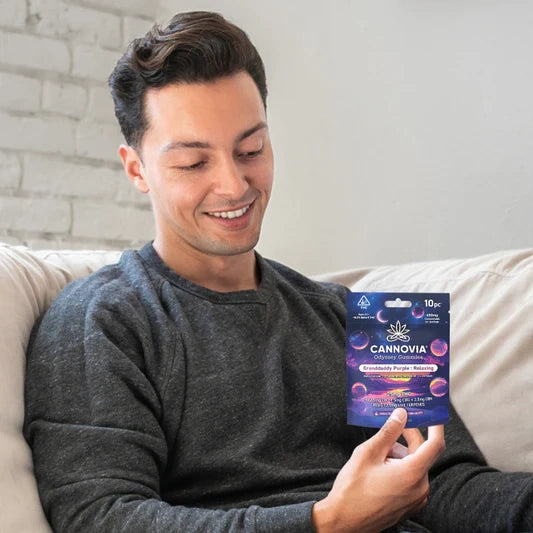
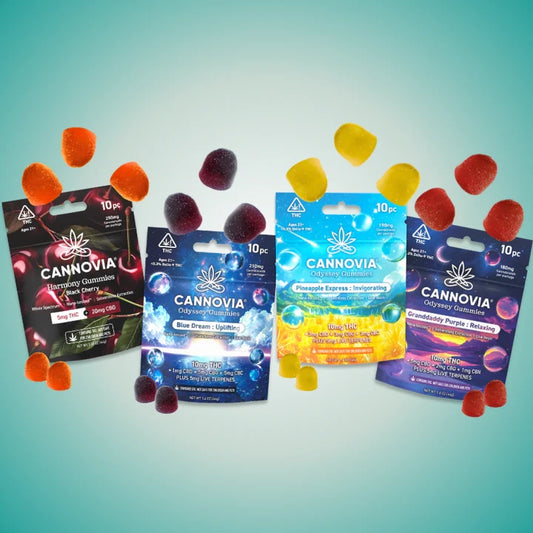
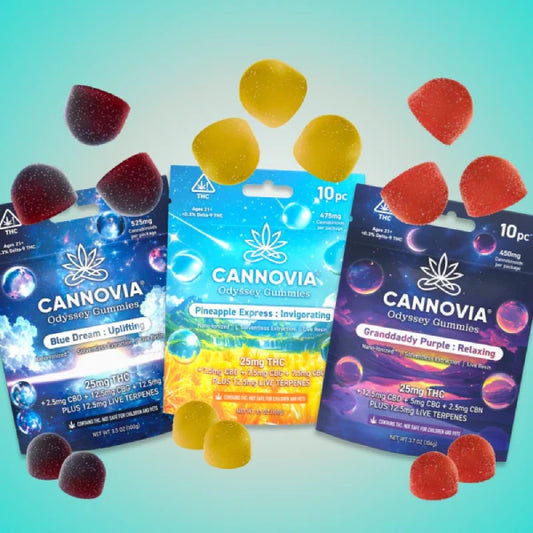
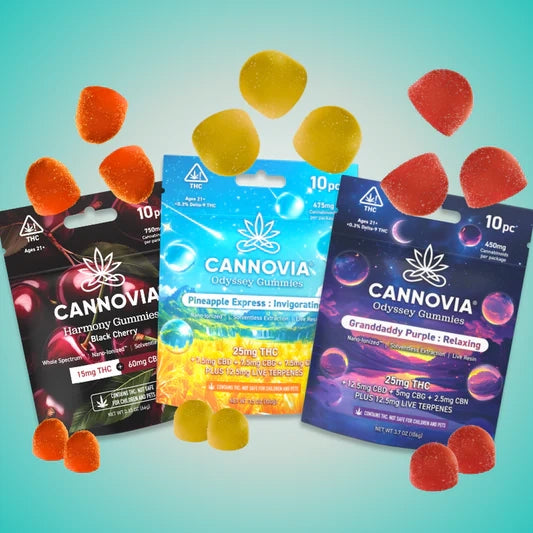
Granddaddy Purple Odyssey Gummies
Pineapple Express Odyssey Gummies


Delta 9 THC has been reported to have a lot of potential benefits.
What is Delta 10 THC?
Delta 10 THC, or delta-10-tetrahydrocannabinol, is a rare and newly discovered cannabinoid that is derived from hemp. Delta 10 THC is similar to Delta 9 THC, but with a double bond on the tenth carbon atom.
It was accidentally created by a California-based company that was extracting cannabinoids from hemp contaminated with fire retardants. Delta 10 THC is still under research and its effects are not fully understood.
Potency and Effects: Which THC is strongest?
One of the main differences between the three types of THC is their potency and effects. Potency refers to how much THC is needed to produce a certain effect, while effects refer to the quality and intensity of the experience.
How potent is Delta 8 THC?
Delta 8 THC is less potent than Delta 9 THC, but more potent than Delta 10 THC.
Delta 8 THC has a lower affinity for the CB1 receptor, which is responsible for the psychoactive effects of THC, and a higher affinity for the CB2 receptor, which is involved in the anti-inflammatory and immune-modulating effects of THC.
Delta 8 THC also has a lower bioavailability, which means that less THC reaches the bloodstream when consumed.
According to some estimates, Delta 8 THC is about 50-70% as potent as Delta 9 THC.
How potent is Delta 9 THC?
Delta 9 THC is the most potent and widely available form of THC. Delta 9 THC has a high affinity for the CB1 receptor, which makes it more effective at inducing the psychoactive effects of THC.
Delta 9 THC also has a high bioavailability, which means that more THC reaches the bloodstream when consumed.
Delta 9 THC can be found in various cannabis products, such as flowers, concentrates, edibles, and oils, with varying levels of potency and purity.
Delta-9 is considered more ‘natural’ as it is abundant during the natural life cycle of the cannabis plant, while Delta-8 and Delta-10 are produced through synthetic conversion processes because of their smaller quantities.
How potent is Delta 10 THC?
Delta 10 THC is the least potent and least studied form of THC. Delta 10 THC has a low affinity for both the CB1 and CB2 receptors, which makes it less effective at producing the effects of THC.
Delta 10 THC also has a low bioavailability, which means that very little THC reaches the bloodstream when consumed.
Delta 10 THC is not naturally occurring in cannabis plants, but is artificially synthesized from hemp. It is still a novelty in the market and its availability and quality are very uncertain.
What can each THC be used for?

Another difference between the three types of THC is their potential benefits and uses. Benefits refer to the positive effects that THC can have on various health conditions, while uses refer to the reasons why people consume THC.
Potential benefits of Delta 8 THC
Delta 8 THC has been shown to have several potential benefits, such as:
- Delta 8 THC may reduce anxiety and stress.
Potential benefits of Delta 9 THC
Delta 9 THC has been shown to have many potential benefits, such as:
- Delta 9 THC has analgesic properties which means it may help with pain and inflammation.
- Anxiolytic: Delta 9 THC can help reduce everyday anxiety and stress.
- It may also help with maintaining a healthy appetite
Potential Benefits of Delta 10 THC
Delta 10 THC is a relatively new cannabinoid that has been discovered in trace amounts in cannabis plants.
It is mostly produced synthetically from hemp-derived CBD or delta 9 THC, using chemical processes that may involve solvents and acids. Delta 10 THC is similar to delta 9 THC, but it has a slightly different arrangement of atoms, which may affect how it interacts with the body.
According to some anecdotal reports, delta 10 THC may have the following benefits:
- Relaxation and euphoria
- Altered perception of time
- Increased appetite
- Pain relief
- Anxiety relief
- Improved sleep
Note: There is very little scientific evidence to support these claims, and more research is needed to understand the full extent of delta 10 THC's effects, benefits, and risks.
Delta 10 THC is also a psychoactive compound, which means it can cause intoxication and impair your judgment, memory, and coordination.
Legality and Availability: Are These THC Types Legal?
The legality and availability of delta 8, delta 9, and delta 10 THC vary depending on the state and federal laws, as well as the source and concentration of the cannabinoids.
This is a general overview of the legal status of these THC types, but it is not a substitute for legal advice and may not reflect the most recent changes in the law.
You should always check the local laws and regulations before purchasing or using any of these products.
Federal Law
The 2018 Farm Bill legalized Hemp-derived Delta-9 THC, as long as it’s derived from hemp plants which contain no more than 0.3% of delta 9 THC by dry weight.
Hemp is defined as a variety of the cannabis plant that has a low concentration of delta 9 THC and a high concentration of CBD.
This means that hemp-derived delta 8 and delta 10 THC products are technically legal at the federal level, as long as they comply with the 0.3% limit of delta 9 THC.
The FDA has not approved or evaluated any of these products for safety or efficacy, and has issued warnings to some companies that sell them for making false or misleading claims.
Hemp-derived delta 8 and delta 10 THC products, even though they are synthetically enriched, are federally legal as long as they meet the FDA’s criteria of less than 0.3% THC by dry weight.
Hemp-derived Delta-9 THC products are also federally legal as long as they meet the federal criteria.
State Law
Even if hemp-derived delta 8 and delta 10 THC products are legal at the federal level, they may still be illegal at the state level, depending on the state laws and regulations. Some states have explicitly banned or restricted these products, while others have allowed or tolerated them.
Where to Find and Purchase Each Type of THC
If you live in a state where delta 8, delta 9, or delta 10 THC products are legal, you may be able to find and purchase them from various sources, such as:
- Online retailers: There are many online stores that sell delta 8, delta 9, or delta 10 THC products, such as oils, tinctures, edibles, vape cartridges, and more. Therefore, it is important to do your research and choose reputable and reliable online retailers that provide third-party lab test results, customer reviews, and clear product information.
- Dispensaries: If you live in a state where medical or recreational marijuana is legal, you may be able to find and purchase delta 9 THC products from licensed dispensaries. These products are usually regulated and tested for quality and safety, and may offer a wider range of strains, flavors, and effects. However, you may need a valid medical marijuana card or a valid ID to access these products, and you may be subject to taxes and fees.
- Local shops: You may also be able to find and purchase delta 8, delta 9, or delta 10 THC products from local shops, such as smoke shops, vape shops, health stores, or gas stations. However, these products may not be regulated or tested for quality and safety, and may have inconsistent or inaccurate labels, ingredients, or dosages. Therefore, it is advisable to be cautious and careful when buying these products, and to check the reputation and reviews of the shop and the product.
Which THC product is best for you?
There is no one right answer for everyone, as different people may have different needs, preferences, expectations, and limitations when it comes to using THC. However, here are some general tips that may help you approach these questions:
- Would you prefer a solution that's synthesized artificially or one that's derived from natural means?
Delta 8 and Delta 10 THC are typically synthesized from other cannabinoids like CBD or Delta 9 THC. But there’s one compound that stands out in its natural form - Delta 9 THC.
Derived directly from the cannabis plant, Delta 9 THC is not a product of synthetic conversion but a gift from nature itself. While Delta 8 and Delta 10 THC have their roles, would you prefer these artificially synthesized solutions, or would you lean towards the naturally occurring, abundantly produced Delta 9 THC?
Remember, nature has a way of creating balance, and Delta 9 THC is a testament to that. So, what’s your preference - the synthetic Delta 8 and Delta 10 THC, or the natural harmony of Delta 9 THC?
- Considering your needs and preferences: Think about why you want to use THC, and what kind of effects you are looking for. Do you want to use it for medical or recreational purposes? Do you want to feel relaxed, euphoric, creative, or something else? Do you prefer to consume it orally, sublingually, or by inhalation? Do you have any allergies or sensitivities to certain ingredients or flavors? These are some of the factors that may influence your choice of THC type, product, and dosage.
- What are you looking to experience with THC? This question is related to the previous one, but it focuses more on the specific outcomes and sensations that you want to achieve with THC. For example, some people may use THC to relieve pain, nausea, anxiety, or insomnia, while others may use it to enhance their mood, creativity, or appetite. Depending on what you are looking to experience, you may prefer one type of THC over another, as they may have different effects and intensities. For instance, delta 9 THC is known to be the most potent and psychoactive form of THC, while delta 8 THC is less potent and less psychoactive, and delta 10 THC is the least studied and least understood.
- What are your concerns about potential side effects? THC is a psychoactive compound that can have various effects on your body and mind, both positive and negative. Some of the common side effects of THC may include :
- Dry mouth
- Red eyes
- Increased heart rate
- Drowsiness
- Impaired memory
- Impaired coordination
- Anxiety
- Paranoia